Carousel with slides shown at a time. Use the Previous and Next buttons to navigate.

Environment
Our initiatives to gradually reduce carbon emissions
Our environmental approach
At GLS, we care about our effect on the world around us. Every parcel and its related logistics and transport processes have an impact on natural resources and cause carbon emissions. We want to continue our mission of connecting people around the world while gradually reducing our impact on the environment.
We launched our group-wide environmental strategy to implement a series of initiatives to progressively reduce carbon emissions and ensure that knowledge and efforts are shared and implemented across our entire international network.
Reducing emissions starts with understanding where they come from
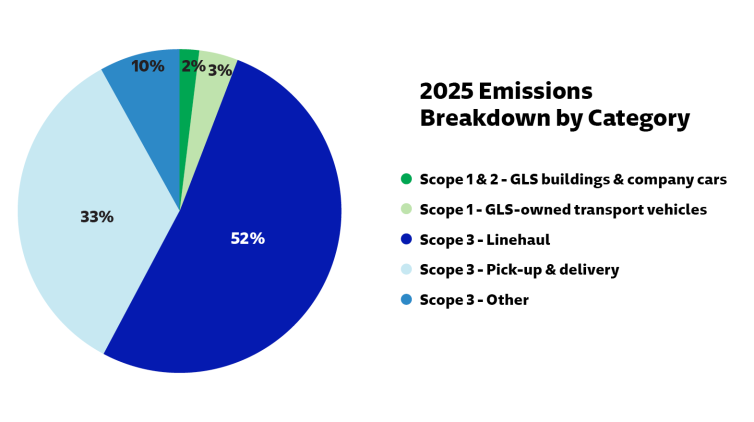
As a parcel logistics company, most of our carbon emissions are generated through transport activities across our network. While Scope 1 and 2 emissions stem from GLS-owned transport vehicles, company cars and purchased energy, the largest share of emissions falls under Scope 3 , which is associated with linehaul and pick-up and delivery services provided by subcontracted transport partners. This is why decarbonising transport is at the heart of our environmental strategy.
Our measures to gradually reduce our carbon emissions
Reducing carbon emissions is a long-term effort that requires action across different parts of our business. We pool our resources and expertise to implement measures to continuously reduce our carbon emissions. This includes emissions from our transport operations, our site operations, such as purchased electricity or heat for our buildings, and our company car fleet.
Please visit your GLS country's website for further details on the steps taken in this direction.
-

Transforming our transport fleet
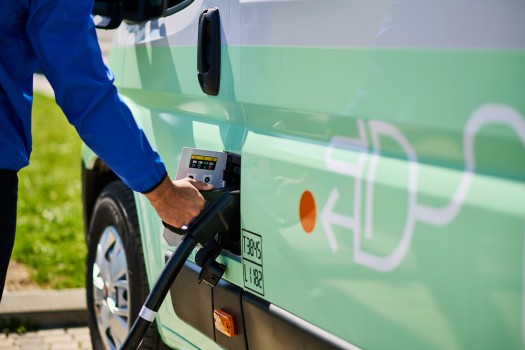
We are electrifying the transport fleet in collaboration with our transport partners. Different electric vehicles are used within the Group, such as vans, bikes and trucks. In addition, we test alternative fuels, such as Hydrotreated Vegetable Oil (HVO). More than 8,200 electric and low-emission vehicles [2] were in use across the GLS network at the end of December 2025, representing 19% [3] of the transport fleet. -

Modernising our depots and hubs
We are converting fossil heating systems to electric heat pumps, expanding charging infrastructure at our sites, increasing the use of renewable electricity and installing photovoltaic systems to support on-site renewable electricity generation. By the end of December 2025, 83% of our business' global electricity consumption came from renewable sources. -

Increasing the share of electric company cars
We are gradually increasing the share of electric company cars across the GLS Group’s network and expanding the supporting charging infrastructure. This transition is supported by local initiatives and partnerships that help accelerate the adoption of electric vehicles. By the end of December 2025, 46% of company cars across the GLS Group were electric.
Selected examples from across the GLS Group
GLS countries continue to implement local initiatives that support the Group-wide environmental strategy. These examples illustrate selected measures taken in individual markets and do not represent all activities across the GLS network.
Progressive electrification of heavy goods transportation
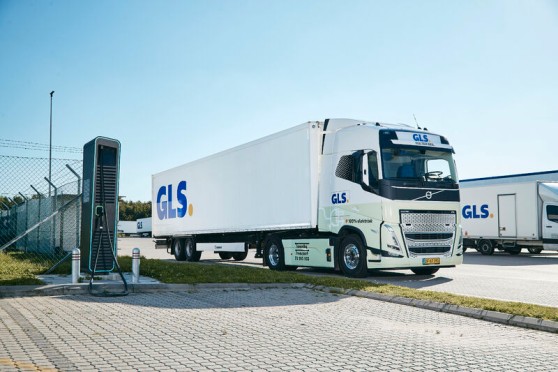
GLS continues to expand the use of electric trucks across its network. By the end of 2025, electric trucks were operating in linehaul services in eight countries, including Germany, General Logistics Systems Germany GmbH & Co. OHG France General Logistics Systems France S.A.S., Toulouse, France , Italy General Logistics Systems Italy Spa. , Austria General Logistics Systems Austria GmbH, Ansfelden, Austria , the Czech Republic General Logistics Systems Czech Republic s.r.o., Jihlava, Czech Republic , the Netherlands GLS Netherlands Holding B.V. Utrecht, the Netherlands , Denmark General Logistics Systems Denmark A/S, Kolding, Denmark and Canada GLS Logistics Systems Canada Ltd. . In Italy General Logistics Systems Italy S.p.A., San Giuliano Milanese, Italy , 14 Mercedes-Benz eActros 600 electric trucks were in operation, supporting national and cross-border linehaul services.
Transforming last-mile delivery
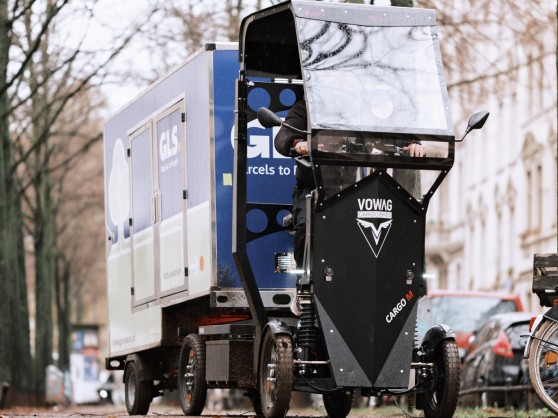
Several GLS countries are transforming their last-mile fleets through the use of electric delivery vehicles and cargo bikes.
By September 2025, GLS Denmark General Logistics Systems Denmark A/S, Kolding, Denmark had achieved fully electric parcel delivery and pick-up operations in Roskilde, Denmark’s 10th largest city, and operated more than 230 electric vehicles nationwide by the end of December 2025.
In May 2025, GLS transport partner VEMO Logistik in Bonn, Germany, delivered around 2,500 parcels per day using 19 cargo bikes and two electric vans.
Renewable electricity
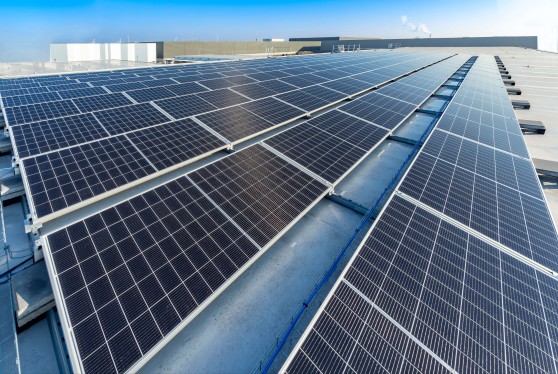
By the end of 2025, 97% of GLS-operated sites in Europe were using renewable electricity. Several GLS countries sourced their electricity exclusively from renewable sources, including Germany General Logistics Systems Germany GmbH & Co. OHG, Neuenstein, Germany , Denmark General Logistics Systems Denmark A/S, Kolding, Denmark , Spain General Logistics Systems Spain S.A., Madrid, Spain , Finland General Logistics Systems Finland Oy, Turku, Finland , Ireland General Logistics Systems Ireland Limited, Dublin, Ireland and the Czech Republic General Logistics Systems Czech Republic s.r.o., Jihlava, Czech Republic . Belgium General Logistics Systems Belgium N.V., Drogenbos, Belgium , France General Logistics Systems France S.A.S., Toulouse, France , the Netherlands GLS Netherlands Holding B.V. Utrecht, the Netherlands and Portugal General Logistics Systems Portugal Lda., Venda do Pinheiro, Portugal sourced more than 95% of their electricity from renewable sources.
Modernising depots and hubs
GLS countries continue to invest in site infrastructure.
In 2025, GLS Portugal General Logistics Systems Portugal Lda., Venda do Pinheiro, Portugal installed photovoltaic systems at its depots in Mealhada and Aveleda with installed capacities of 23 kWp and 71 kWp respectively.
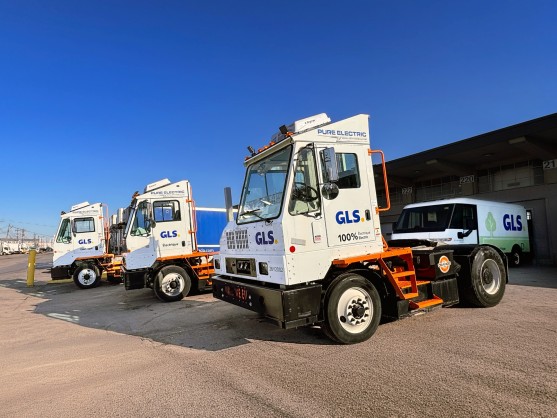
By March 2026, GLS Canada GLS Logistics Systems Canada Ltd., Calgary, Canada had deployed four electric shunters at its hubs in Montreal, Toronto and Winnipeg.
In April 2026, GLS Netherlands GLS Netherlands Holding B.V. Utrecht, the Netherlands opened a new hub in Goes equipped with a heat pump, a 205 kWp rooftop solar installation and a battery storage system with a capacity of 516 kWh.
Increasing the share of electric company cars
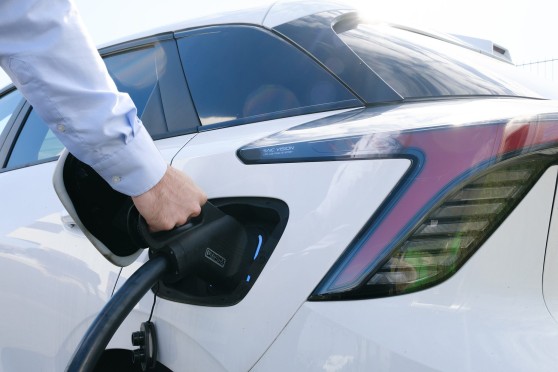
Several GLS countries continued to expand the use of electric company cars in 2025.
By the end of December 2025, GLS Belgium General Logistics Systems Belgium N.V., Drogenbos, Belgium , Austria General Logistics Systems Austria GmbH, Ansfelden, Austria , Denmark General Logistics Systems Denmark A/S, Kolding, Denmark , Finland General Logistics Systems Finland Oy, Turku, Finland , Ireland General Logistics Systems Ireland Limited, Dublin, Ireland , the Netherlands GLS Netherlands Holding B.V. Utrecht, the Netherlands , Portugal General Logistics Systems Portugal Lda., Venda do Pinheiro, Portugal , Spain General Logistics Systems Spain S.A., Madrid, Spain and Canada GLS Logistics Systems Canada Ltd., Calgary, Canada had each exceeded a 50% share of electric company cars. In the Netherlands, electric company cars accounted for 60% of the fleet by the end of December 2025, and employees eligible for a lease car have only been able to select electric models since early 2024.
Our initiatives to financially support climate projects
Climate projects supported by GLS
On top of our initiatives to gradually reduce carbon emissions, some GLS companies are concomitantly also support climate projects at national level. We work with ClimatePartner (Munich, Germany) to voluntarily finance such projects. For further information please read the 'Supporting certified climate projects' page .
Supporting documents
1 GLS B.V. is committed to reduce its absolute Scope 1, 2 and 3 greenhouse gas emissions by 90% by 2045, using 2021 as the base year. The residual emissions will be neutralized. This means the business counterbalances up to 10% of its CO2e emissions with investments in carbon removal projects outside its value chain, in line with the SBTi Net-Zero Standard . The Science Based Targets initiative commitment of GLS B.V. encompasses all affiliated companies of GLS B.V. operating under the GLS trademark.
2 This means vehicles that during driving operation use only electricity or fuels that create lower
emissions than diesel or gasoline fuel (e.g. HVO, biogas, natural gas such as LNG, LPG, CNG). Fur
ther, this also includes parcel deliveries on foot (as of today, only applicable for GLS Spain).
3 Excluding the transport fleet in USA.