The Role of ESG in Our Operations

GLS is committed to responsible growth, guided by Environmental, Social and Governance (ESG) principles. These principles drive our efforts to reduce our environmental impact, support our workforce and communitiesand uphold transparency and ethical governance across our entire supply chain. We focus on the reduction of carbon emissions, creating an inclusive workplace and supporting local initiatives.

ESG Report 2026

Since 2009, we have been assessing GLS Netherlands' carbon footprint, looking at emissions, resource consumption and waste disposal. The method we use is based on the Green House Gas Protocol and transport emissions are calculated according to the requirements of European standard EN 16258 for calculating and reporting greenhouse gas emissions from transport.

GLS reports in detail on its current goals, activities and progress in economic, social, environmental and corporate matters. Want to know more about what we and other GLS countries are doing on ESG (Environment, Social & Governance)? Then read our ESG report.

Basis of reporting 2025-26 Assurance Statement 2025-26

Our Sustainability Approach

Since 2020, GLS Netherlands has been working to reduce the environmental impact of its operations through an organization-wide sustainability approach. We implement concrete measures across various aspects of our business, ranging from transport and route planning to buildings, depots and energy management.

Our environmental initiatives are embedded in an environmental management system certified in accordance with the ISO 14001 standard. This enables us to work systematically towards our environmental objectives, monitor our progress and identify opportunities for further improvement. A local environmental representative at GLS Netherlands coordinates the implementation of our environmental measures.

Investing in Practical Solutions

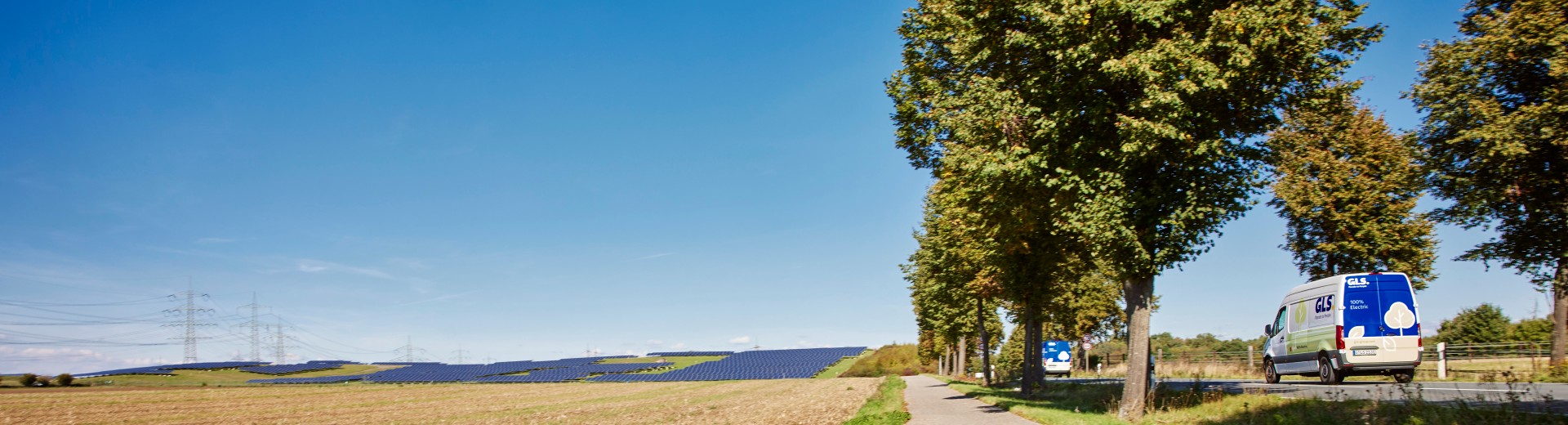
Making our operations more sustainable requires long-term investments. That is why we invest in, among other things, electric delivery vehicles and energy-efficient solutions for our buildings and depots.

We make use of solar panels, heat pumps and LED lighting. For our locations, we purchase electricity generated from wind energy. We also focus on separate waste collection and the responsible processing of different waste streams.

Within our transport operations, we continuously look for ways to improve route efficiency and further expand the use of lower-emission vehicles. In this way, we address CO₂ reduction across different parts of our logistics chain.

A data-driven approach to CO₂ reduction

At the end of 2023, GLS Netherlands committed to the Science Based Targets initiative (SBTi). Through this internationally recognised framework, we work towards climate objectives that align with the goals of the Paris Agreement.

Our CO₂ emissions are calculated annually in accordance with the Greenhouse Gas Protocol. We use these insights to monitor our emissions, assess our progress and identify targeted opportunities for further CO₂ reduction.

Reducing and avoiding CO2 emissions

ThinkSocial

The people who work at and for GLS have different ethnic backgrounds, cultures, religions and beliefs. Appreciation, respect and understanding are important principles for the Group when dealing with employees and partners. Intensive communication with all who make the last mile for GLS when picking up and delivering parcels is an essential part of the cooperation.

The development of our employees is a crucial part of the GLS strategy, with which the Group aims to ensure long-term success for the company and its employees.

In addition, management and employees attach importance to helping people in need. Throughout Europe, GLS companies support carefully selected initiatives in their social environment.

GLS is also involved in sponsoring sports teams and activities. In some cases, these sponsorship projects are also combined with a socially engaged angle.

ThinkQuality

Our quality standards are not limited to transport services, but are interwoven into all business systems and processes. These high requirements and the increasing complexity have led GLS to develop a quality management system in line with ISO 9001:2015. It enables GLS to guarantee seamless internal processes and stable quality with regard to our services.